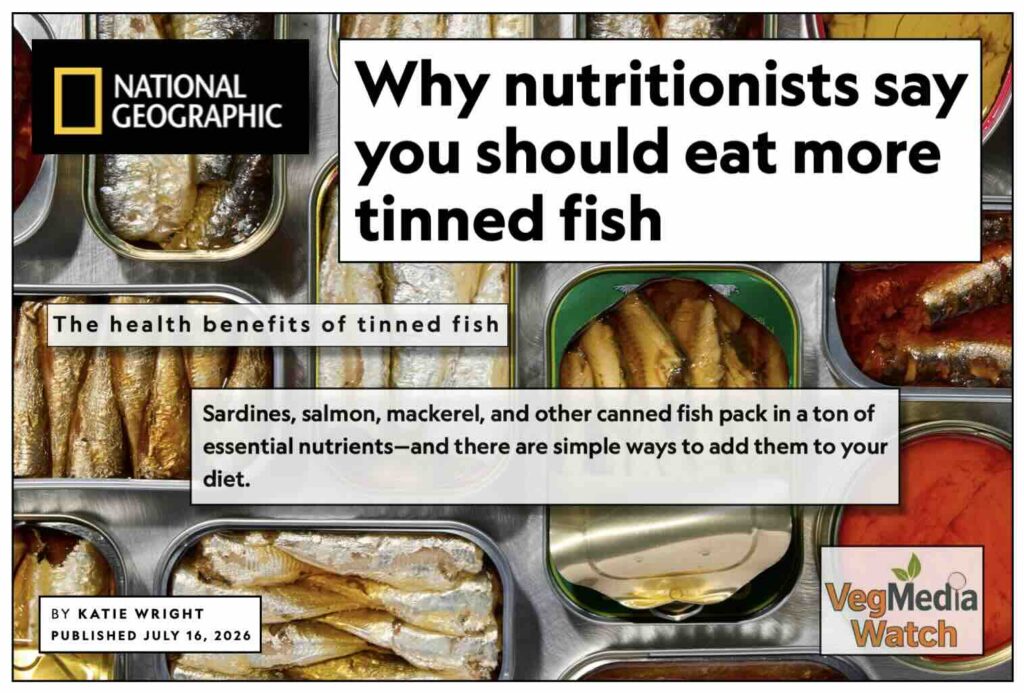
National Geographic has built its reputation on bringing readers closer to wildlife and the natural world. That is why its story encouraging readers to eat more fish is so confounding. The article, titled “Why nutritionists say you should eat more tinned fish,” not only promotes the consumption of sardines, salmon, and other fish, but also offers readers practical advice for eating more of them.
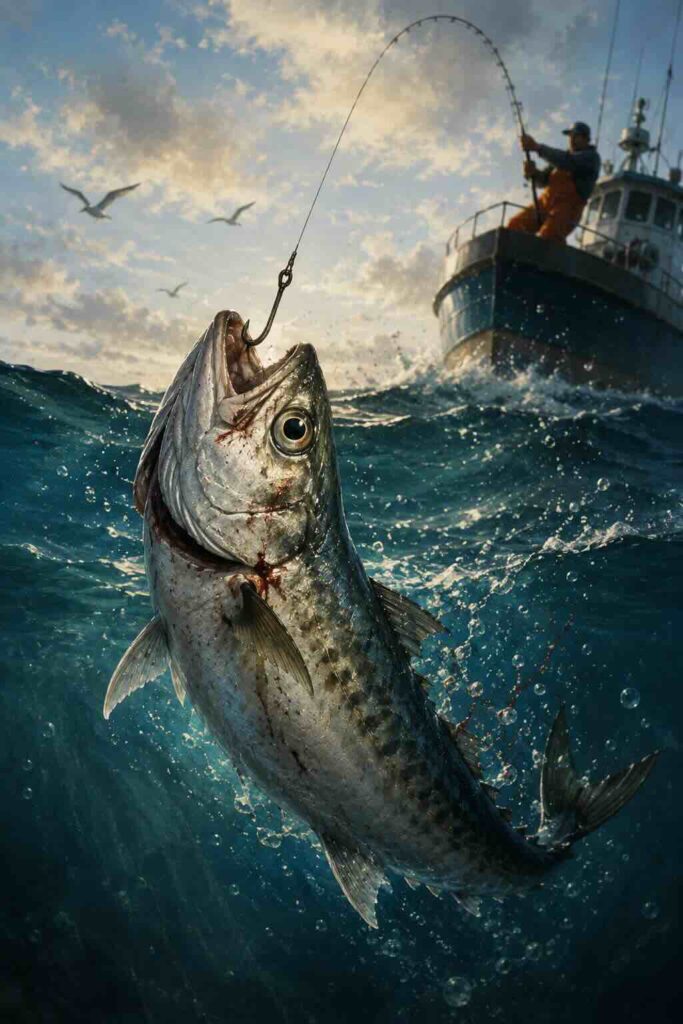
Throughout the article, fish are discussed as a source of nutrients for humans. The reporter makes no reference to the body of scientific data demonstrating that fish are sentient animals who experience pain, fear and stress. That’s a significant omission in an any article about fish, but it’s especially egregious in National Geographic, given the organization’s mission.
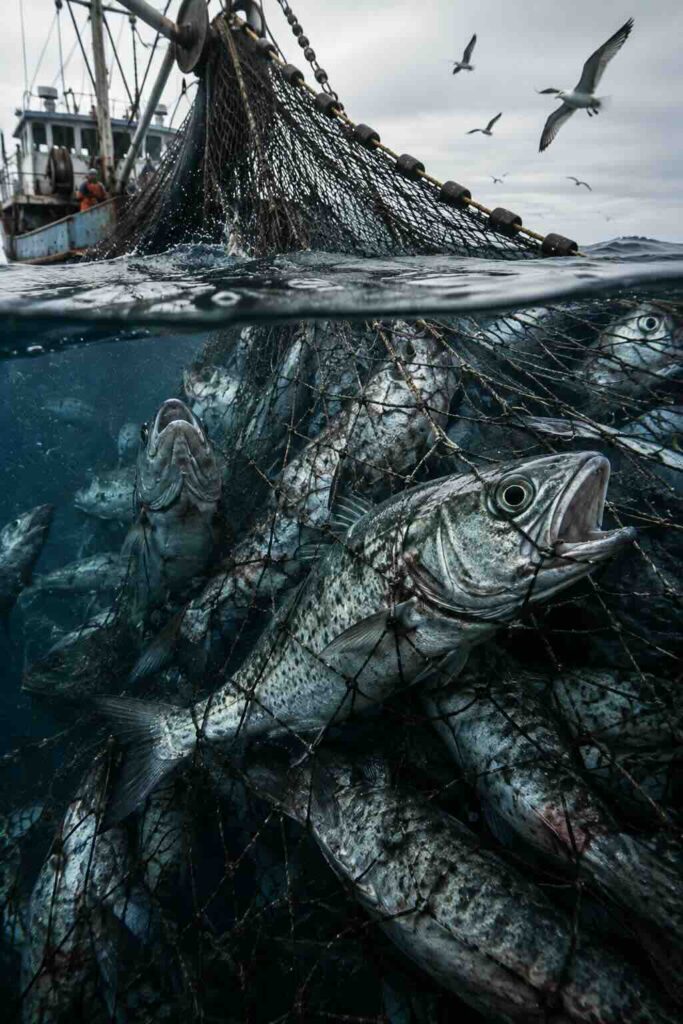
The article also fails to meaningfully address what encouraging greater fish consumption could mean for marine ecosystems.
According to the UN Food and Agriculture Organization’s 2025 global assessment, 35.5% of assessed marine fish stocks are overfished. Commercial fishing can also affect far more than the species being targeted. The FAO notes that fisheries can alter food webs, reduce predator populations, disturb seabeds and habitats, kill non-target species through bycatch and leave lost fishing gear behind that continues trapping marine animals.
National Geographic routinely introduces its audience to the extraordinary lives of animals and the threats facing ecosystems around the world. Yet when some of those same animals are categorized as food, their lives and the environmental consequences of catching them are overlooked.
A nutrition article doesn’t have to become a treatise on animal ethics or fisheries policy, but journalism that explicitly encourages millions of readers to consume more animals should at least acknowledge the broader consequences of that recommendation.
When journalists cover animal-based foods solely through the lens of human health, animals can be transformed from living beings into collections of nutrients. The ethical and environmental costs of producing those nutrients become invisible.
Nathan Lump, As editor-in-chief, you know that, for generations, National Geographic has taught its readers to appreciate wildlife and consider humanity’s impact on the natural world. If you’re going to make the misguided decision to promote animal consumption in the future, then you should at least tell them the whole story, not just the part about how they might benefit.