
In “Americans are paying record prices for steak. Here’s why demand isn’t cracking,” CNBC reporter Brandon Gomez explains that beef prices are soaring because the U.S. cattle herd has fallen due, in large part, to drought. Longer and more severe droughts have dried up grazing land and increased feed costs. But Gomez leaves out important context.
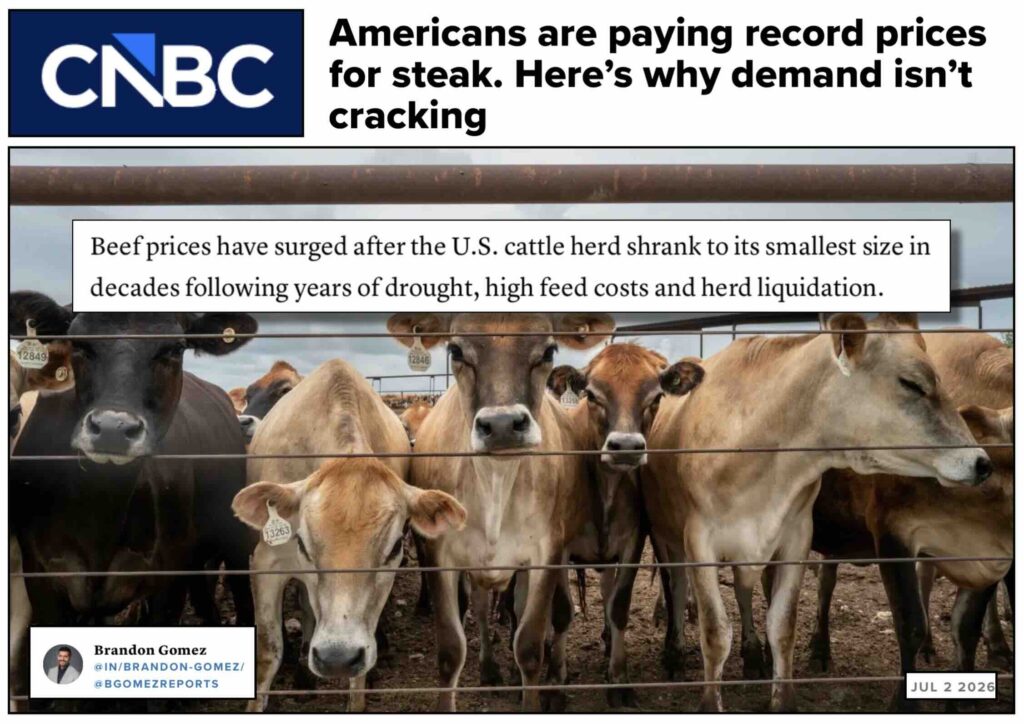
In the television segment and accompanying article, Gomez presents drought as an external force acting upon the beef industry—as though ranchers are simply victims of bad weather. Here’s what’s missing: the beef industry itself is one of the world’s largest drivers of climate change, which increases the risk and severity of drought.
By portraying drought solely as something happening to the beef industry, CNBC reinforces a narrative in which cattle producers are passive victims rather than participants in a system that contributes substantially to climate change.
That framing shields viewers from understanding the full environmental costs of beef production and leaves consumers without the context needed to evaluate the industry’s role in the very crisis driving higher prices.
CNBC correctly explains the mechanics behind today’s record beef prices. But, by failing to acknowledge the beef industry’s role in worsening drought, it presents viewers with only half the picture.
CNBC attributes rising beef prices to drought-induced herd reductions, but reporter @bgomezreports leaves out important context: the beef industry is a significant source of greenhouse gas emissions that contribute to climate change, which increases the risk and severity of… pic.twitter.com/Ltp10UzDYM
— VegMediaWatch (@VegMediaWatch) August 3, 2026
When journalism highlights the costs imposed on an industry while ignoring the costs that industry imposes on society and the environment, it isn’t providing crucial context; it’s offering industry-friendly framing.