ABC News aired a segment on Good Morning America about the financial strain soaring beef prices are placing on barbecue restaurants in Texas. The story, written by Robyn Weil and Kelly McCarthy, portrays the restaurants as victims of forces beyond their control.
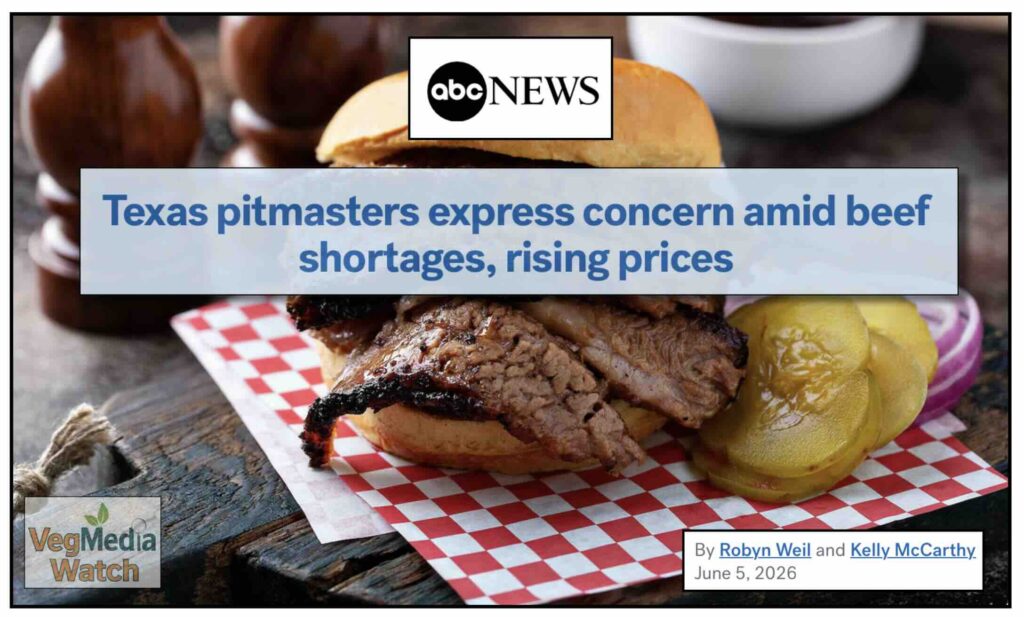
Weil and McCarthy explain that drought has reduced grazing land, forcing ranchers to shrink their herds, which is driving beef prices to historic highs. Yet they never acknowledge the cattle industry’s role in contributing to the drought, a symptom of climate change, which is driven, in part, by the beef industry. Instead, they frame the problem as an unfortunate natural disaster affecting an otherwise blameless industry. This is a familiar pattern in the mainstream media’s coverage of beef.
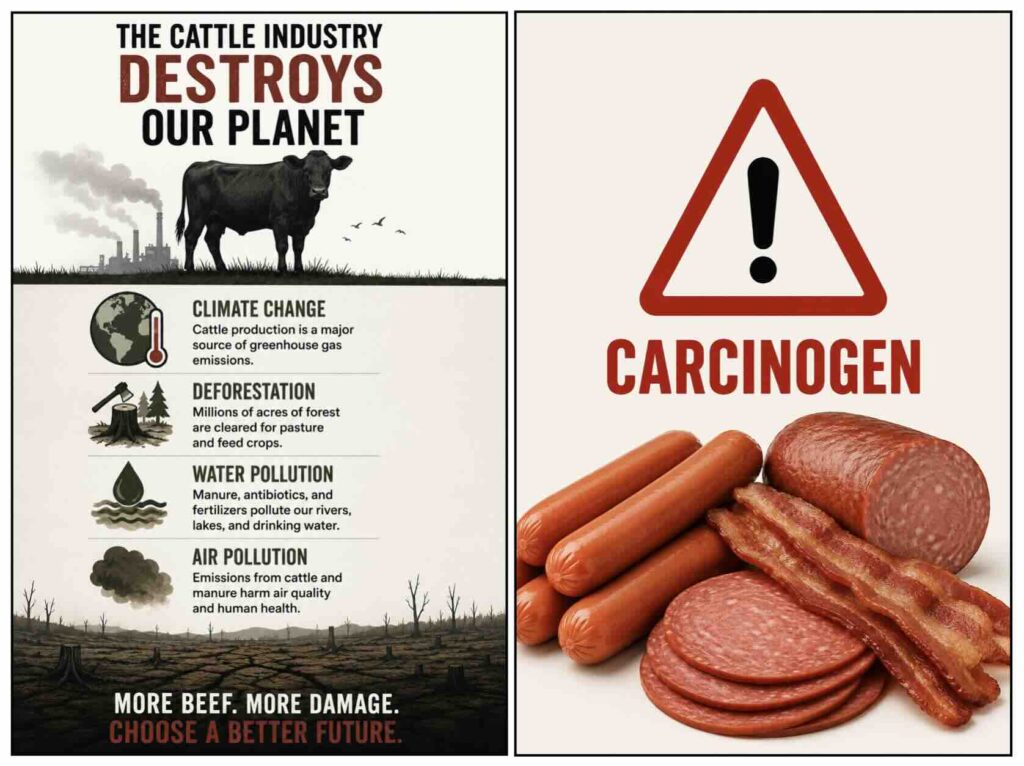
While reporting on the high cost of beef to restaurants, the reporters also fail to address the hidden costs of beef to the planet, the animals and human health. These costs, which never appear on a restaurant’s balance sheet, are substantial.
Cattle ranching is a leading driver of deforestation in many parts of the world. It contributes significantly to greenhouse gas emissions that accelerate climate change. It pollutes waterways with manure and agricultural runoff. It destroys wildlife habitats and contributes to biodiversity loss. The routine use of antibiotics in animal agriculture contributes to antibiotic resistance, a growing public health threat. Heavy consumption of red and processed meat has also been associated with increased risks of several chronic diseases. None of this receives even a passing mention.
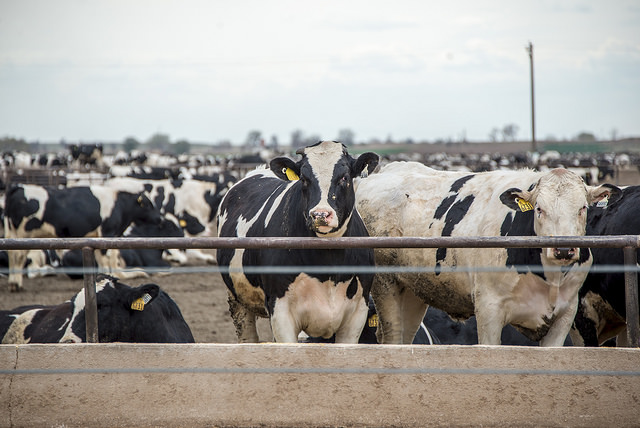
Nor does ABC acknowledge the most obvious victims of the beef industry: the animals themselves. Millions of cattle spend months confined in feedlots before being transported to slaughter. They are the indispensable participants in every barbecue sandwich and brisket platter discussed in the segment, yet they remain completely invisible. By excluding them from the story, ABC reinforces the notion that beef is simply another commodity rather than the product of an industry built on the confinement and killing of sentient beings.
Finally, the reporters fail to ask a more fundamental question: Why should the public view the preservation and expansion of the beef industry as an unquestioned good?
Balanced journalism requires journalists to provide audiences with enough context to understand the broader implications of the industries being covered. When ABC News reports on rising beef prices without mentioning cattle production’s contribution to climate change, viewers receive an incomplete explanation for the very problem the story seeks to examine. When it portrays barbecue restaurants solely as victims while ignoring the environmental, public health and animal welfare costs embedded in every pound of beef they purchase, it tells only one side of the story.
Journalists routinely include context about the health effects of tobacco, the environmental consequences of fossil fuels and the public costs of other industries whose products impose burdens beyond their sticker price. The beef industry deserves the same scrutiny.
Until mainstream news organizations begin informing audiences about beef’s hidden, externalized costs, including its contribution to climate change, deforestation, water pollution, biodiversity loss, antibiotic resistance, poor health outcomes and animal suffering, coverage like this will continue to present an incomplete and one-sided picture of one of the world’s most environmentally and ethically consequential industries.