In a recent New York Times article, “Good News: Egg Prices Are Down. Bad News: They’re Hurting Farmers,” reporter Julie Creswell explores the economic consequences of falling egg prices for consumers, retailers, and producers. The story examines supply and demand, producer contracts, wholesale markets, corporate earnings, and the lingering effects of avian influenza. Readers learn why egg prices soared, why they have fallen, and who stands to gain or lose financially.
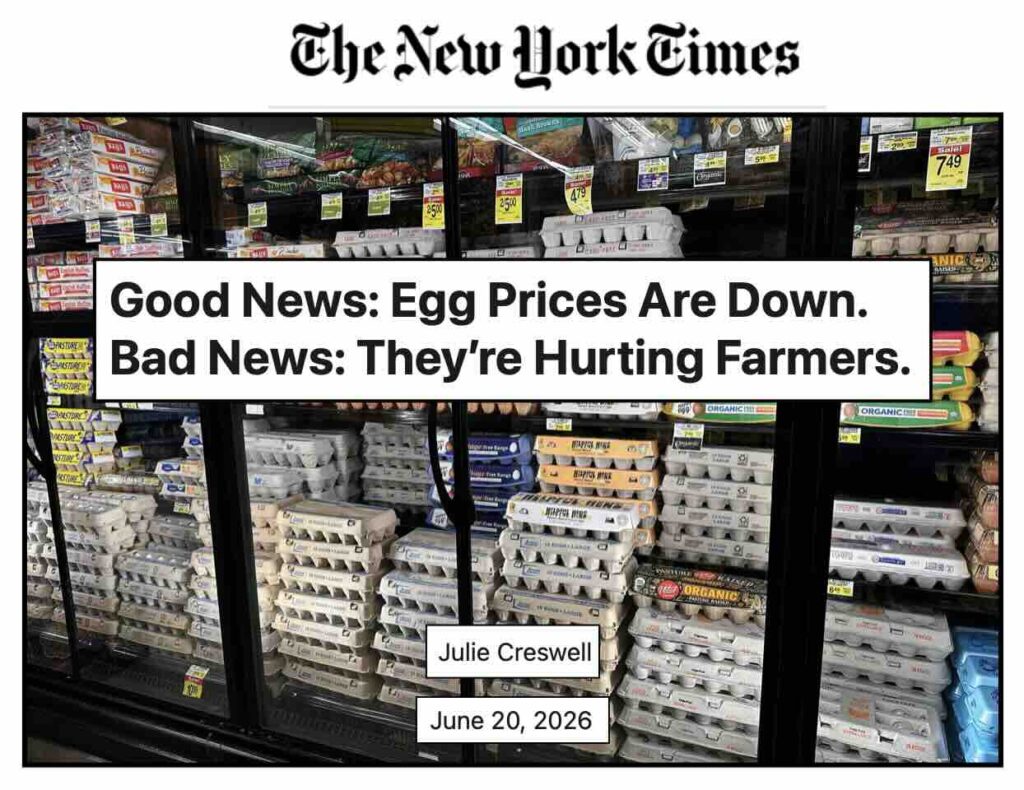
What readers do not learn is how the egg industry keeps prices low in the first place.
In a 1,600-word article devoted to the economics of egg production, the animals at the center of the story are largely invisible. Hens are portrayed as units of production instead of living beings whose welfare is profoundly affected by the industry’s relentless drive to maximize output while minimizing costs.
This omission reflects a broader pattern in mainstream media coverage of animal agriculture. Journalists frequently report on meat, dairy, and egg industries through the lens of business, consumer prices, and market forces while overlooking the ethical realities that make these industries profitable.
The economics of egg production cannot be separated from the treatment of the birds themselves. In order to minimize costs, producers must house the hens in crowded conditions, limiting their ability to engage in natural behaviors. Even on many farms that have eliminated battery cages, birds are held in large-scale industrial facilities.
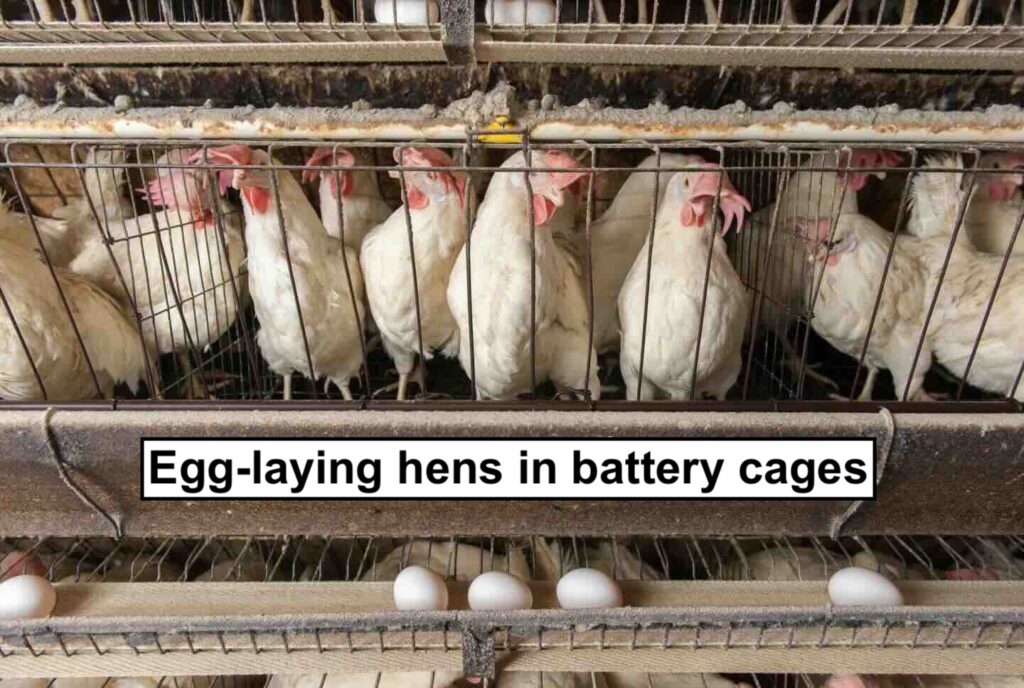
The stress of intensive confinement is so severe that the industry removes a portion of the birds’ beaks to prevent them from injuring each other. The industry defends painful beak trimming and other cruel practices as necessary management tools. The New York Times doesn’t include any of this context in its story. Instead, eggs are presented as commodities.
A more balanced piece would have acknowledged that the true cost of cheap eggs is not borne solely by farmers navigating volatile markets. It is also borne by the hundreds of millions of hens whose lives are shaped by the demands of industrial production. Readers deserve to understand that connection when evaluating the benefits of lower prices at the grocery store.
The story also misses an opportunity to explore the environmental implications of egg production. While eggs generally have a smaller environmental footprint than many forms of meat, industrial egg production still requires substantial quantities of feed, land, water, and energy. These impacts are rarely discussed when media outlets frame animal products primarily as consumer goods whose affordability should be celebrated.
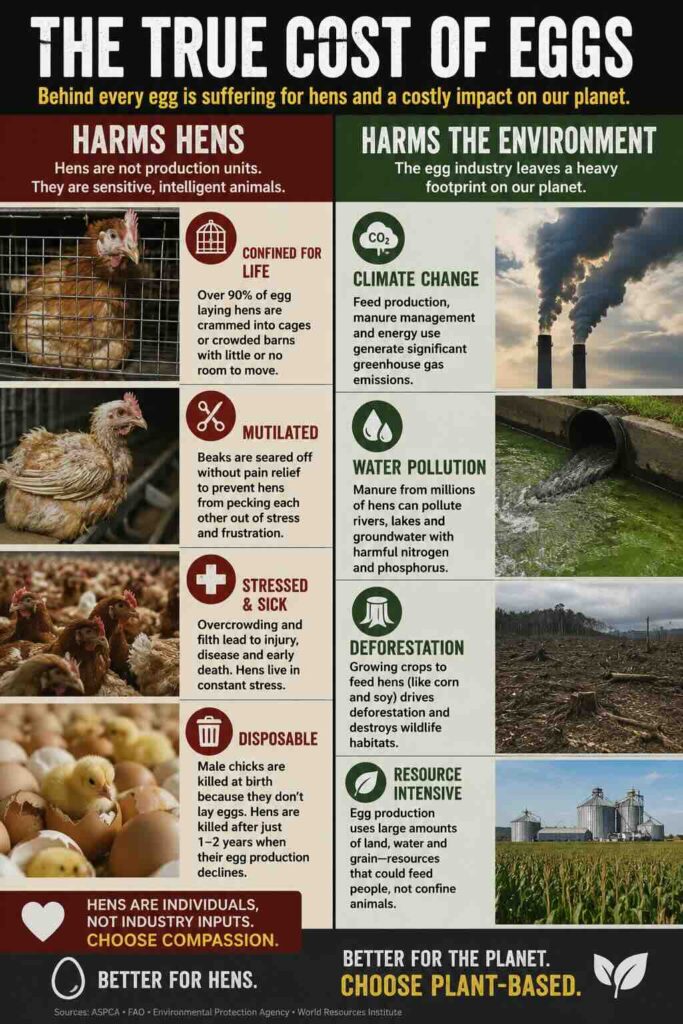
To be clear, journalists are not obligated to write animal rights essays every time they cover food prices. But when a lengthy article examines the costs and benefits of a major agricultural industry, excluding the welfare of the animals who make that industry possible creates an incomplete picture.
The New York Times has the resources and journalistic talent to provide readers with a fuller understanding of the food system. Doing so would not require abandoning business reporting. It would simply require recognizing that the story of egg production involves more than markets, contracts, and stock prices. It also involves animals.
By focusing exclusively on economic winners and losers, the Times leaves readers with the impression that lower egg prices are an uncomplicated benefit. A more complete and balanced account would acknowledge that cheaper eggs depend on practices that impose significant costs on the hens themselves. Those costs deserve a place in the story.
Julie Creswell and The New York Times should broaden their food industry coverage to include the animals whose lives are most directly affected by the industries they report on. Until then, readers will continue to receive an incomplete account of the true cost of producing inexpensive animal products.