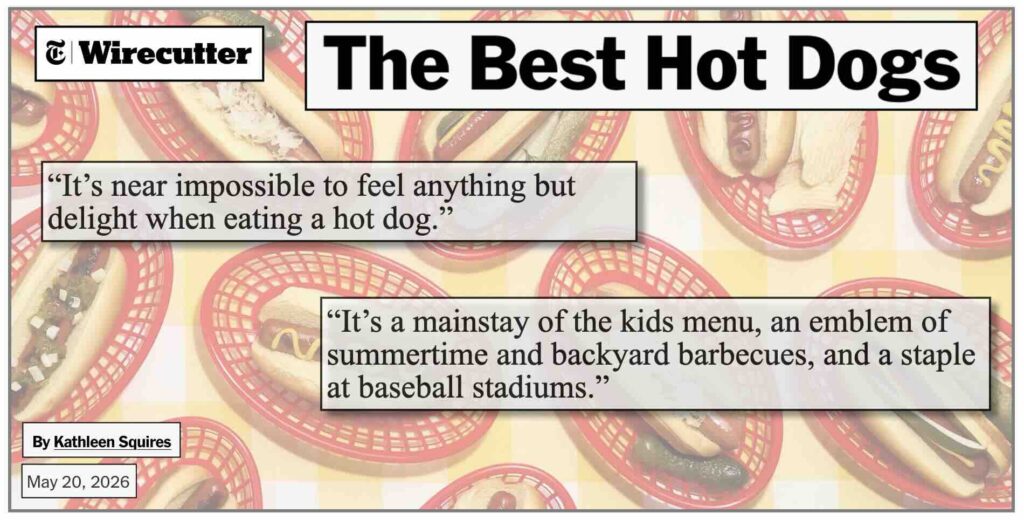
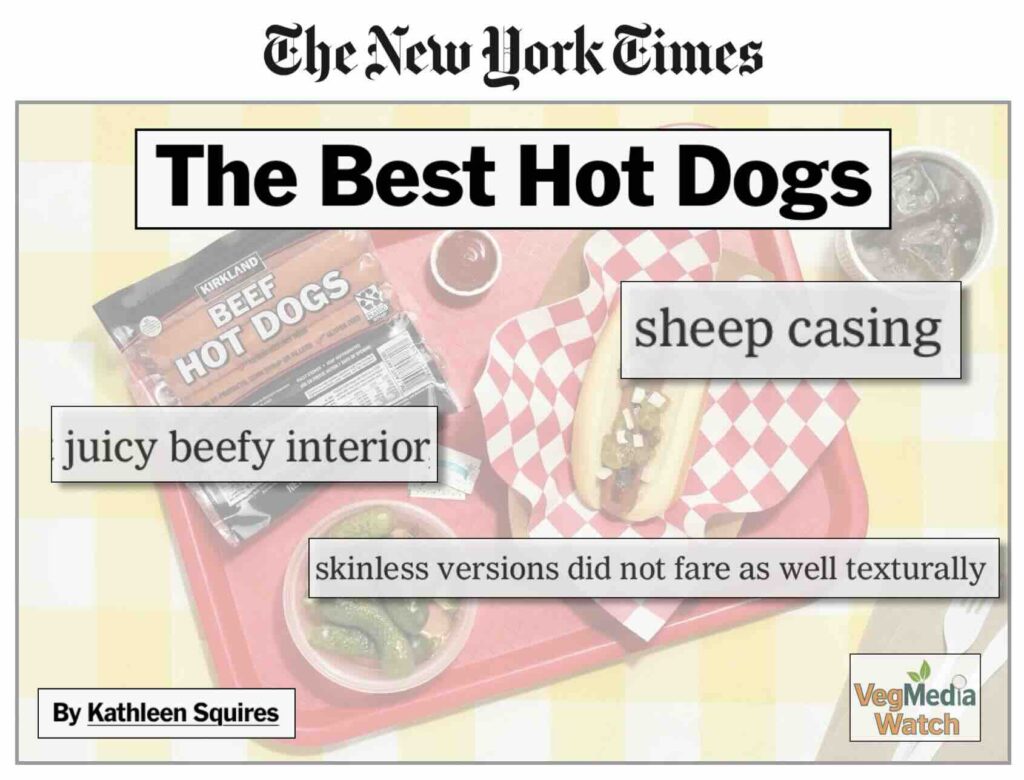
The New York Times’ Wirecutter recently published a review by Kathleen Squires ranking beef hot dogs and advising readers on which brands they should buy. Squires opens the article with an enthusiastic celebration of the products she is reviewing. She writes that hot dogs are “joy in a bun” and that it’s “near impossible to feel anything but delight when eating a hot dog.”

Before evaluating 31 brands based on taste, texture, snap, appearance, and price, Squires writes that hot dogs are an emblem of summer and backyard barbecues and a staple of baseball games.
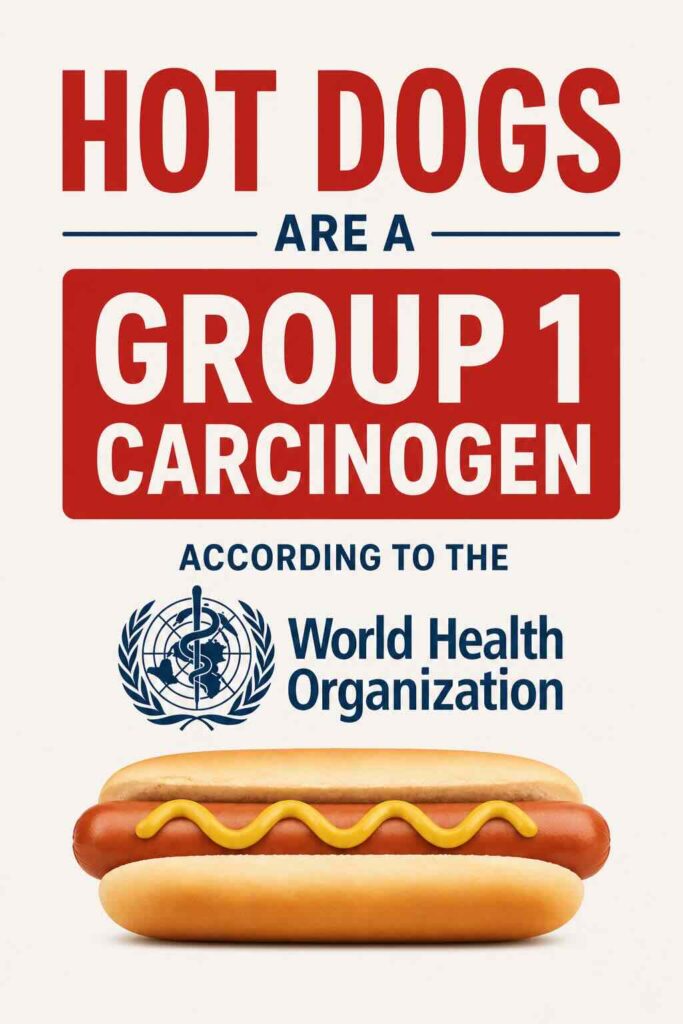
What readers are not told is arguably more important than what they are. Nowhere in the nearly 3,000-word article does Squires mention that processed meat, including hot dogs, are classified as a Group 1 carcinogen by the World Health Organization’s International Agency for Research on Cancer. Group 1 is the agency’s highest category of evidence.
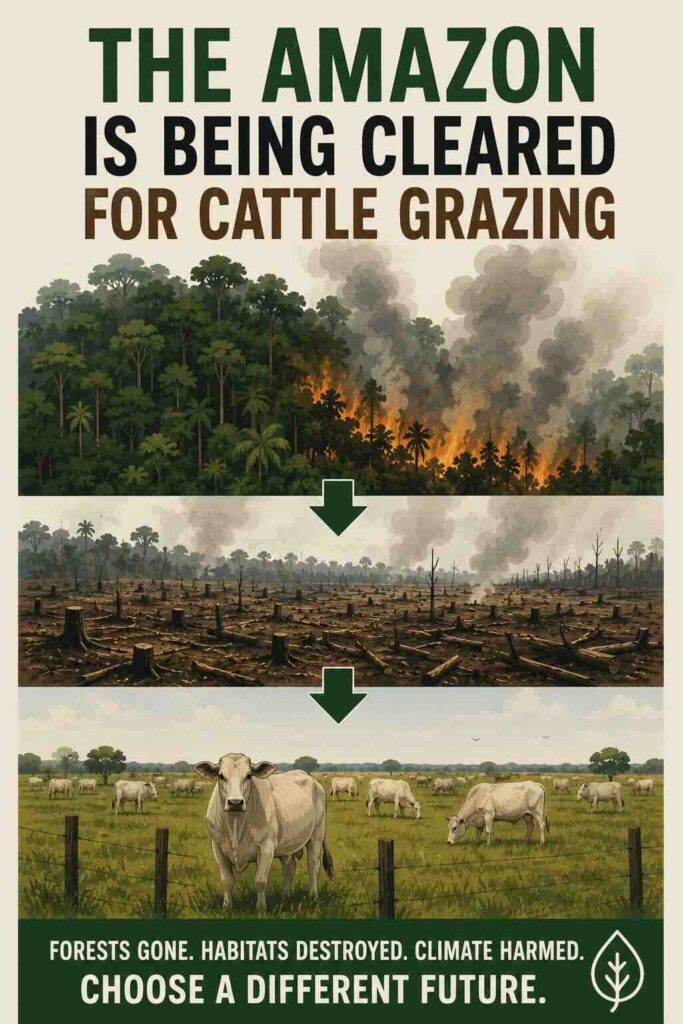
Squires also sidesteps the environmental consequences associated with beef production — deforestation in the Amazon, greenhouse-gas emissions, water pollution, species extinction and biodiversity loss.
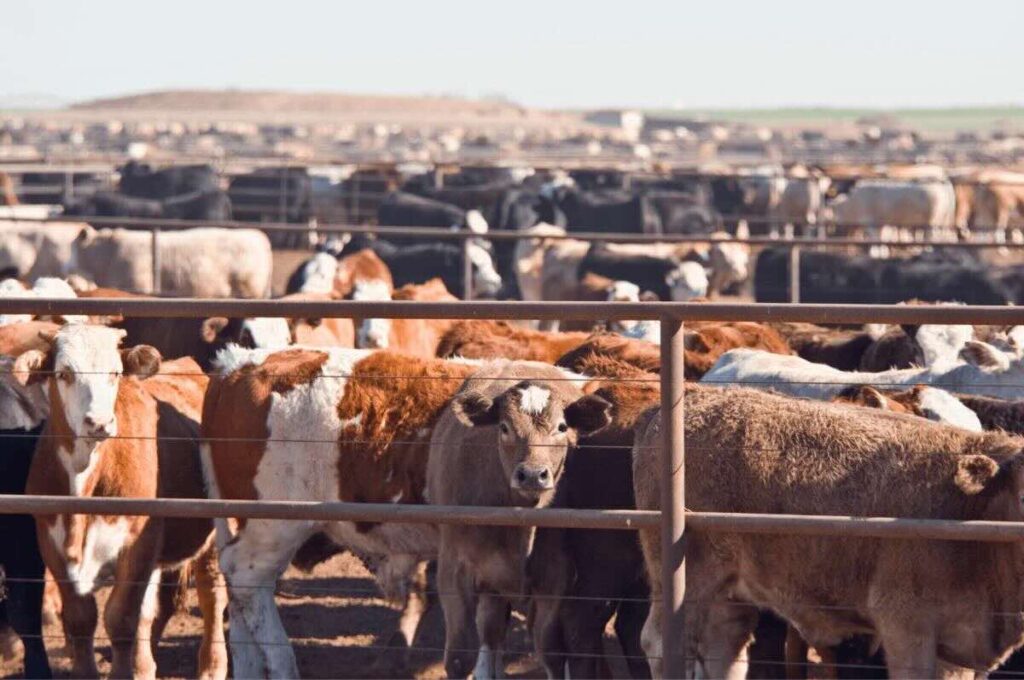
The animals themselves are absent from the story as well. Readers encounter hot dogs only as consumer products competing for market share, not as the remains of animals who were bred, confined, transported, and slaughtered to produce them.
To be clear, Wirecutter’s mission is to recommend products. But journalism does not cease to be journalism simply because it appears in a product-review format. When The New York Times devotes thousands of words to helping readers choose between brands of processed meat, it has an opportunity—and arguably a responsibility—to provide relevant context about the product being promoted.
If the New York Times wrote only about flavor, packaging, convenience, and affordability while omitting any mention of lung cancer in an article about cigarettes, most readers would recognize that as incomplete and irresponsible. Yet when the product is processed meat, many journalists appear comfortable ignoring proven health risks.
The omissions are especially striking given The New York Times’ frequent coverage of climate change, public health, and animal welfare. Those concerns disappear entirely when the subject shifts from the consequences of beef production to the pleasures of consuming beef.
Readers deserve information that allows them to make informed decisions—not only about which hot dog tastes best, but also about the broader consequences associated with the products they buy.